
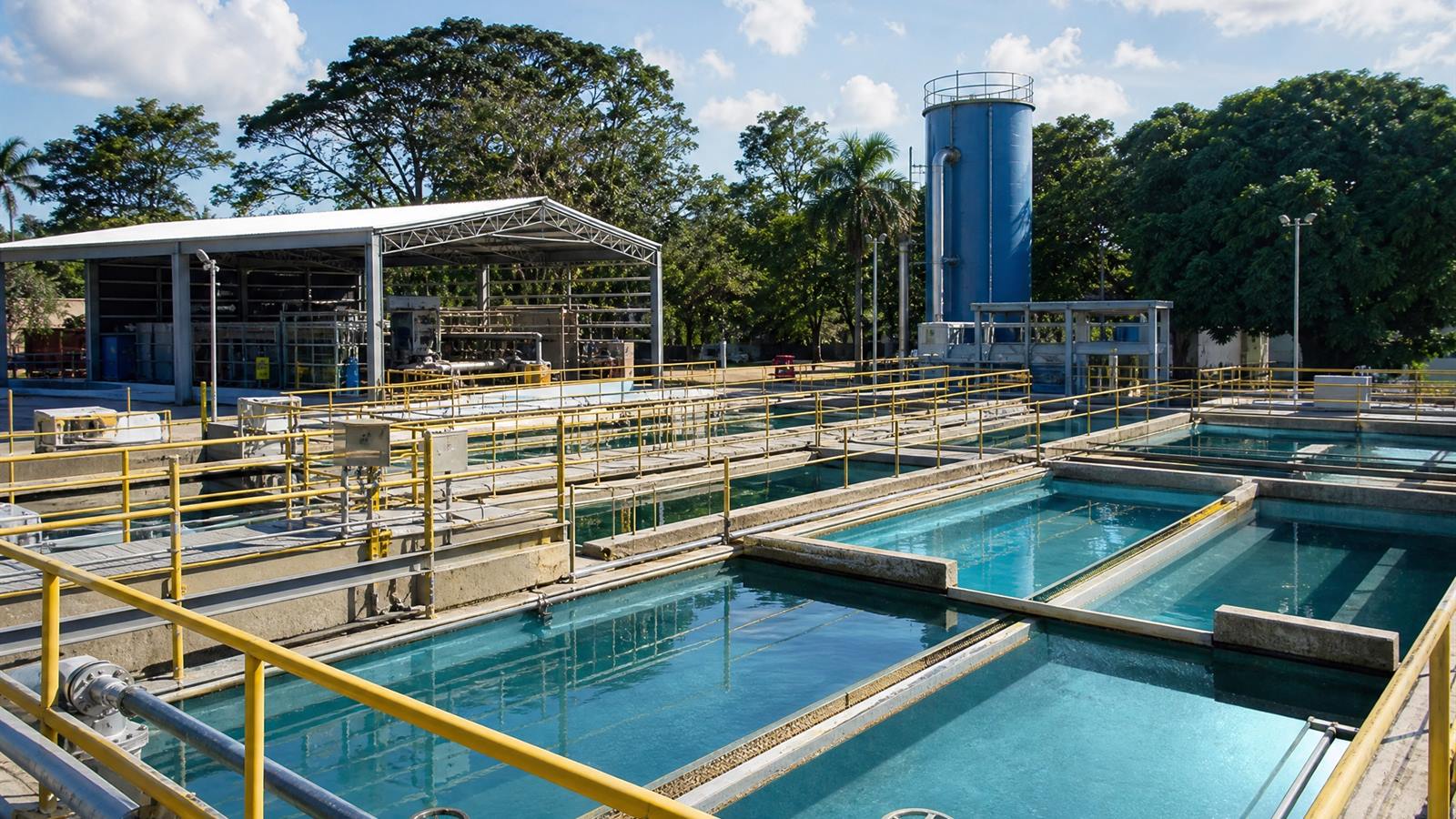
On-site hypochlorite generator (in situ) for water utilities.
The Sanitation hypochlorite generator produces sodium hypochlorite on-site from salt, water and electricity, through brine electrolysis. In other words: no more transport, storage or handling of chlorine gas — safe, continuous disinfection for public water supply.
Buying chlorine means cost, logistics and risk.
Relying on purchased, transported chlorine carries three liabilities that every water treatment plant operator knows well.
Recurring cost
Buying chlorine gas or commercial hypochlorite means supply contracts, recurring freight and loss of active content during storage. In addition, the cost fluctuates with the market and supplier price increases.
Logistics dependency
Disinfection becomes hostage to deliveries, lead times and availability. A supply disruption interrupts chlorination and compromises the residual delivered to the population.
Chlorine gas risk
Chlorine gas cylinders and hazardous products on site require licensing and an emergency plan. They also expose operators and neighbors to the risk of a toxic leak.
Sanitation: on-site hypochlorite generator by electrolysis.
The Sanitation generator produces sodium hypochlorite at the plant itself, through brine electrolysis. The NaCl solution flows through titanium electrolytic cells, where chloride is oxidized, generating active chlorine on the spot. In addition, automated dosing pumps allow fine adjustment of the residual according to the plant's flow rate — continuously and automatically.
From salt to hypochlorite, right at the treatment plant.
Salt + water
First, brine is prepared with ordinary salt and water — no hazardous inputs at the facility.
Electrolytic cell
Next, the reactor converts the brine through electrolysis: the electric current releases the active chlorine.
Sodium hypochlorite
The chlorine solution is generated on the spot, already at working concentration.
Network disinfection
Finally, continuous dosing treats the water distributed to the population.
Benefits of a hypochlorite generator for your water utility.
Savings
A local input made from ordinary salt, with no chlorine supply contracts, recurring freight or losses from expired stock. As a result, the cost per kg of chlorine becomes predictable.
Operational safety
Eliminates the transport, storage and handling of chlorine gas, reducing risks for operators and the surrounding community.
Sustainability
Fewer freight emissions, less packaging and a smaller logistics footprint. In other words, clean disinfection aligned with the municipality's environmental goals.
Autonomy
Production happens on demand, at the plant's own pace, without depending on deliveries or third-party minimum stock.
Compliance
Stable, traceable free residual chlorine, within the standards of Brazilian Ordinance GM/MS 888/2021 for drinking water.
Precise dosing
Control by ORP and current density keeps the residual at the setpoint, with minimal variation and no waste of inputs.
On-site chlorination vs. purchased, transported chlorine.
Questions from those who run water utilities.
What is on-site chlorination?
Does the system comply with Brazilian Ordinance GM/MS 888/2021?
What infrastructure is needed at the facility?
Is it safer than chlorine gas?
Do you handle installation and operation?
Let's size your plant.
Tell us the population served and the plant's flow rate. We will get back to you with a custom design and quote for a hypochlorite generator for your water supply system.