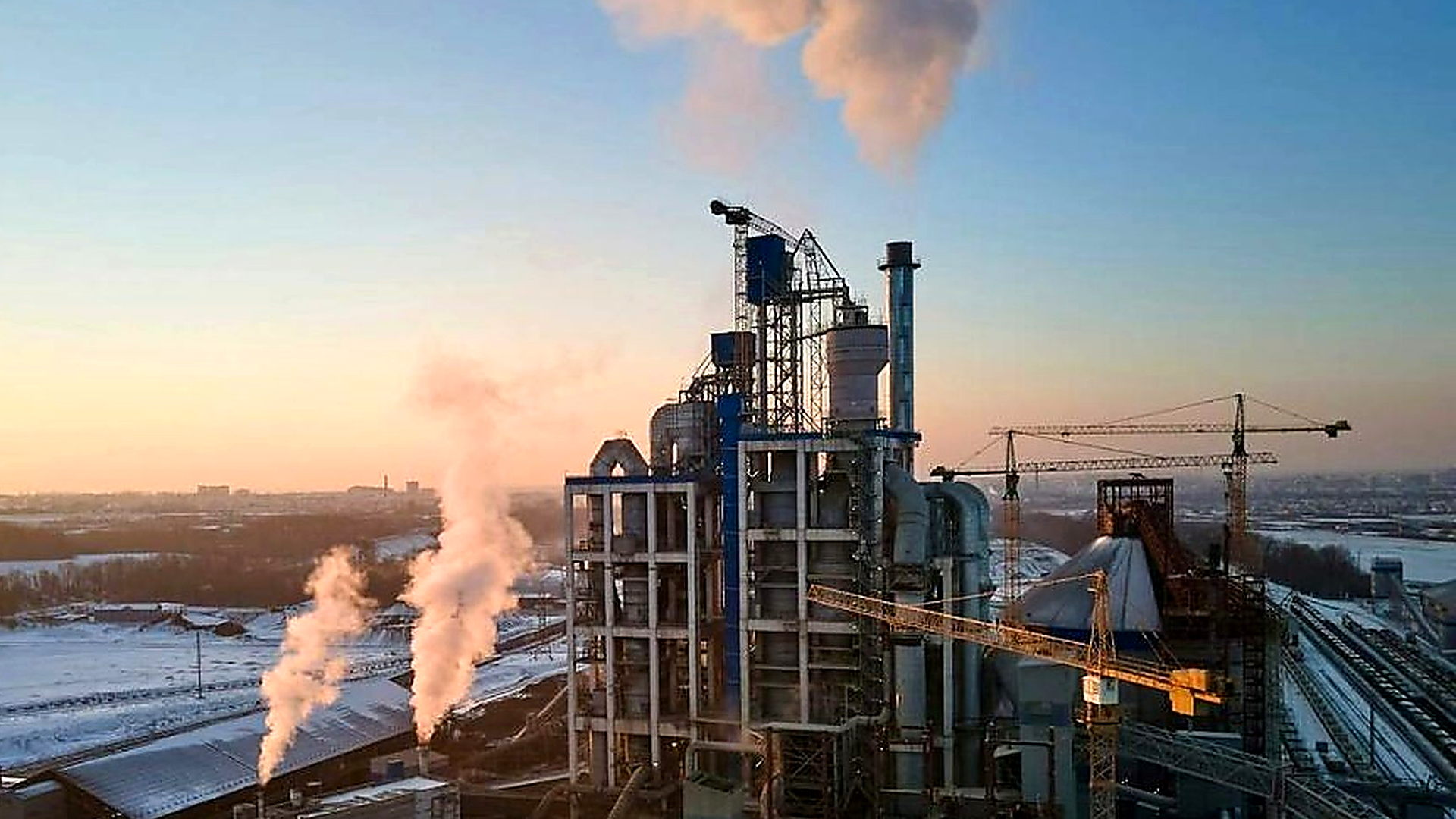
Produce sodium hypochlorite on-site by electrolysis — from nothing but water, salt (NaCl) and electricity. Your plant generates chlorine at the exact dose, continuously and automatically, without buying, transporting or storing chlorine gas or commercial hypochlorite. The result: more autonomy, lower operating costs and no chemical risk in storage.
Conventional chlorination depends on an input that is purchased, transported and stored. That is why it carries three technical liabilities that every plant's water and wastewater manager knows well.
Because commercial hypochlorite (10–12%) loses active chlorine content during storage, you pay for a product that degrades. On top of that come freight, idle stock and overdosing to make up for the loss of concentration.
In addition, treatment continuity depends on suppliers, delivery times and availability. A single supply disruption is enough to interrupt disinfection and compromise the residual in the network.
Chlorine gas cylinders and drums of concentrated hypochlorite in the yard pose risks of leaks, spills and occupational exposure. They therefore require compliance with safety regulations (Brazilian NR-20), ventilation, containment and emergency plans.
The on-site generator Sanitation produces sodium hypochlorite on-site through brine electrolysis. The NaCl solution flows through electrolytic cells with titanium electrodes coated with mixed metal oxides (MMO/DSA); by applying a controlled direct current, the system oxidizes the chloride and generates active chlorine on the spot. Current density sets the dosage, allowing fine ppm adjustment according to chlorine demand and treated water quality — all continuously and automatically.
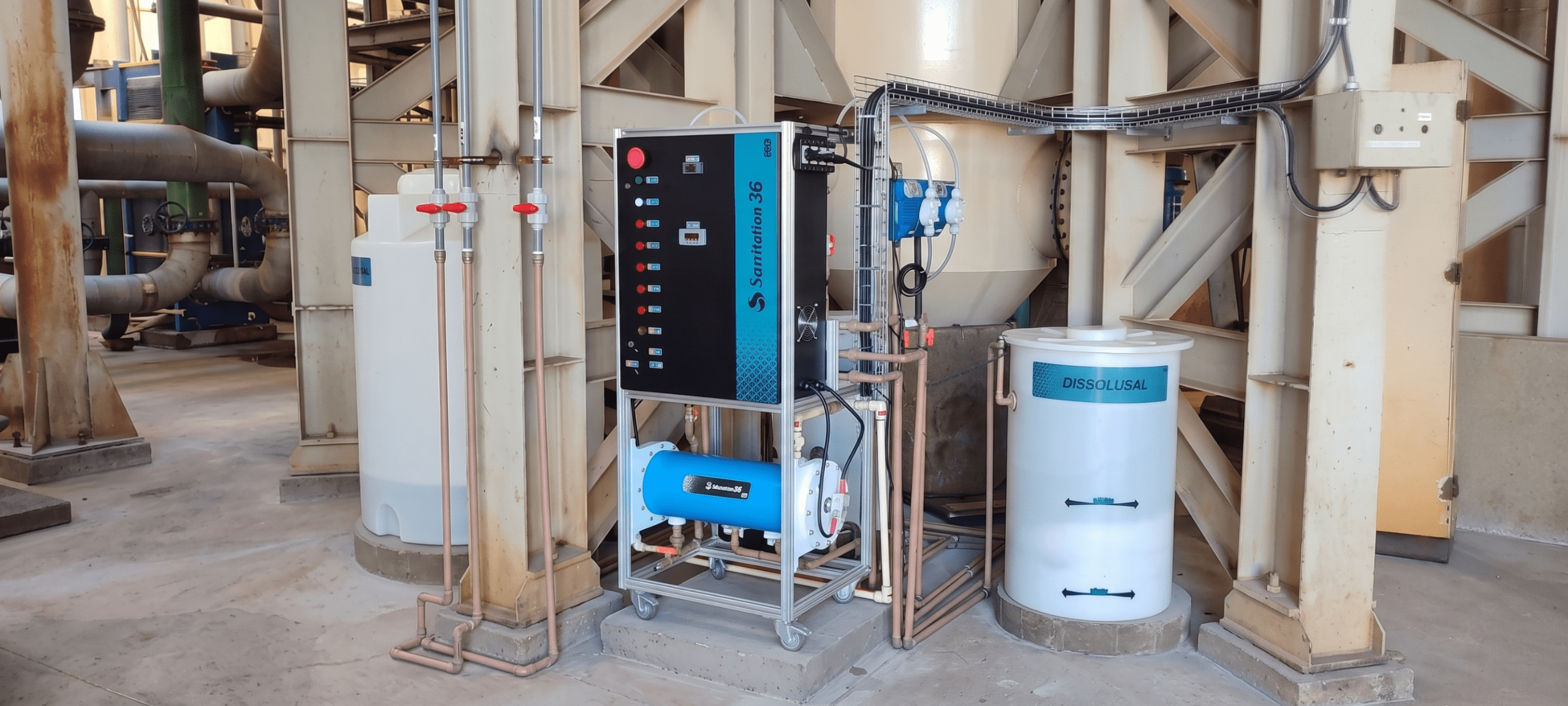
The mill needed reliable disinfection of its process water, with precise dosing and a stable residual, without depending on purchasing and storing concentrated chlorine — and without compromising operational safety. So we installed the on-site generator Sanitation 36, with on-site chlorination by electrolysis. As a result, the plant stopped buying chlorine and started producing its own disinfectant, at the exact dose it needs.
Disinfection of process water, cooling towers and reuse water, with biofilm control and a stable residual — without depending on chlorine logistics. In addition, on-demand dosing follows the seasonality of the harvest.
Stable free residual chlorine for sanitation and water treatment in line with Brazilian sanitary standards (MAPA/SIF). This way, the quality team keeps ppm under continuous control, with no batch-to-batch variation.
Large flows of process and reuse water are treated with on-site generation. This reduces the handling of hazardous chemicals and simplifies the plant's input inventory.
Production happens on demand, at the plant itself. Treatment no longer depends on deliveries, freight or third-party minimum stock.
Ending recurring purchases and overdosing reduces operating costs (OPEX) per kg of active chlorine.
The generator works with low-concentration hypochlorite (<1%). This eliminates chlorine gas and concentrated stock — and with them, the risk of leaks and exposure.
Free residual chlorine remains stable and traceable, meeting the standards of Brazilian Ordinance GM/MS 888/2021 and the sanitary requirements of your application.
Control by ORP/redox and current density keeps the ppm setpoint with minimal variation. In other words: the right chlorine, at the right time, with no waste.
The design is tailored to the flow rate (m³/h), chlorine demand and target residual of your network, with a validated mass balance.
First, our engineers run a technical assessment of your water treatment — flow rate, chlorine demand and target residual. Then they size the ideal on-site generator for your plant. No obligation.
Chat on WhatsAppLeave your details and a specialist will contact you.